If you have looked into adding a chatbot to your website, you have probably noticed that “chatbot” can mean very different things depending on who is selling it. Some are glorified FAQ buttons. Others use the same AI models powering ChatGPT. A few do both.
The difference matters. Choosing the wrong type of chatbot wastes money, frustrates visitors, and creates more work for your team instead of less. Choosing the right one can capture leads around the clock, reduce support volume, and give your customers a better experience than most of your competitors offer.
Here is a breakdown of the main types of chatbots, what each one does well, where it falls short, and which businesses should consider each.
1. Rule-based chatbots (decision tree bots)
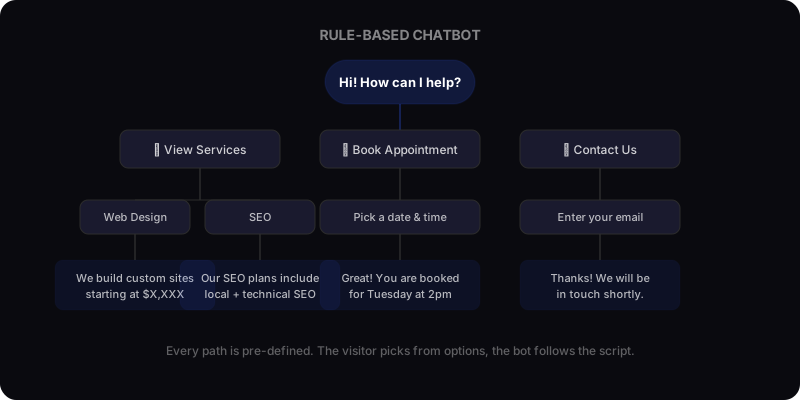
Rule-based chatbots are the simplest type. They follow pre-written scripts and decision trees. When a visitor clicks a button or types a keyword, the bot responds with a pre-programmed answer and presents the next set of options.
Think of them as an interactive FAQ. The visitor picks from a menu of choices, and the bot guides them down a fixed path.
How they work:
The bot creator maps out every possible conversation flow in advance. Each user input triggers a specific response. If the visitor says something outside the script, the bot either asks them to rephrase or hits a dead end.
Pros:
- Simple to set up and maintain
- Predictable responses with no risk of hallucination or off-topic answers
- Low cost, with many free or inexpensive platforms available
- Easy to update when your information changes
- Works well for straightforward, repetitive interactions
Cons:
- Cannot handle questions outside its script
- Feels rigid and impersonal to visitors
- Requires manual updates for every new scenario
- Poor at understanding natural language or intent
- Visitors who do not find their question in the menu often abandon the chat
Best for:
- Small businesses with a limited set of common questions
- Restaurants, salons, and appointment-based businesses needing simple booking flows
- Companies testing chatbots for the first time with a small budget
- Websites where the goal is to route visitors to the right page or form
Not ideal for:
- Businesses with complex or varied customer questions
- Organizations that want to capture and qualify leads through conversation
- Any business where visitors expect a natural, conversational experience
Example platforms: Tidio (basic tier), ManyChat, Chatfuel, HubSpot chatbot builder
2. AI-powered chatbots (conversational AI)
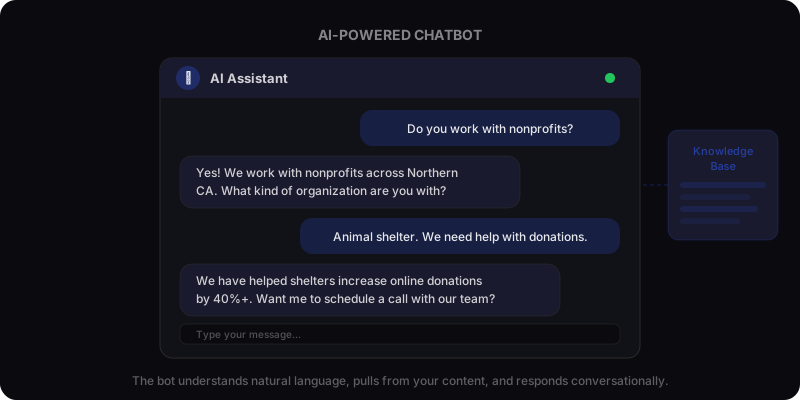
AI-powered chatbots use natural language processing and large language models to understand what visitors are asking and generate responses in real time. Instead of following a script, they interpret intent, pull from a knowledge base, and respond conversationally.
These are the bots that feel like talking to a real person. When trained well, they can handle nuanced questions, follow the thread of a conversation, and provide answers the bot creator never explicitly programmed.
How they work:
The bot is connected to your business content: service pages, FAQs, pricing info, policies, and any documents you provide. When a visitor asks a question, the AI searches that knowledge base, understands the context, and generates a relevant response. Most modern AI chatbots are built on models like GPT-4, Claude, or similar LLMs.
Pros:
- Handles a wide range of questions, including ones you did not anticipate
- Natural, conversational tone that visitors prefer
- Gets smarter over time as you refine its knowledge base
- Can qualify leads by asking follow-up questions based on context
- Reduces support volume significantly by resolving issues without human intervention
Cons:
- Requires thoughtful initial training and knowledge base setup
- Risk of hallucination if guardrails are not properly configured
- Higher cost than rule-based bots
- Needs periodic review of conversation logs to catch gaps
- Can occasionally give answers that are technically correct but not aligned with your brand voice
Best for:
- Professional services firms (law, accounting, consulting) with complex service offerings
- Healthcare providers who need to screen, educate, and route patients
- SaaS companies with detailed product questions
- Real estate agencies handling property inquiries and scheduling
- Any business with a high volume of varied customer questions
Not ideal for:
- Businesses that need 100% scripted, compliance-regulated responses with zero flexibility
- Very small businesses with only a handful of common questions (overkill for the use case)
- Organizations unwilling to invest in initial training and ongoing review
Example platforms: Intercom Fin, Drift AI, custom GPT-based solutions, Voiceflow (AI mode)
3. Hybrid chatbots
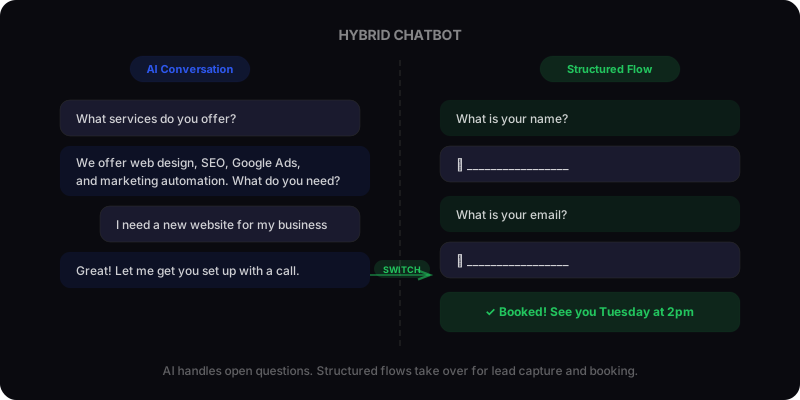
Hybrid chatbots combine rule-based flows with AI capabilities. They use structured paths for critical actions (like booking an appointment or collecting contact information) and AI for open-ended conversation (like answering product questions or handling unexpected inquiries).
This is the approach we recommend most often for small and mid-size businesses. You get the reliability of scripted flows where it matters and the flexibility of AI everywhere else.
How they work:
The bot starts with AI-driven conversation. When the visitor’s intent matches a high-value action (scheduling, lead capture, support ticket), the bot switches to a structured flow to ensure accuracy. If the AI encounters something it cannot answer confidently, it escalates to a human or captures the question for follow-up.
Pros:
- Best of both worlds: conversational flexibility with structured reliability
- Critical actions (booking, lead capture) follow predictable paths
- AI handles the long tail of unexpected questions
- Smart escalation to human support when needed
- Visitors get a natural experience without the risks of a fully open AI conversation
Cons:
- More complex to set up than either type alone
- Requires defining which interactions should be scripted vs. AI-driven
- Higher cost than pure rule-based bots
- Still needs periodic review and refinement
Best for:
- Service businesses that need to book appointments and qualify leads
- E-commerce stores handling product questions, order status, and returns
- Healthcare and wellness providers with intake screening and scheduling
- Nonprofits managing donor inquiries, volunteer sign-ups, and event information
- Any business that wants lead capture reliability with a conversational experience
Not ideal for:
- Businesses with extremely simple needs (a rule-based bot would be cheaper and sufficient)
- Organizations without the resources to manage both the AI and scripted components
Example platforms: Intercom, Drift, Voiceflow, GoHighLevel (with AI add-ons), custom builds
4. Voice chatbots (voice assistants)
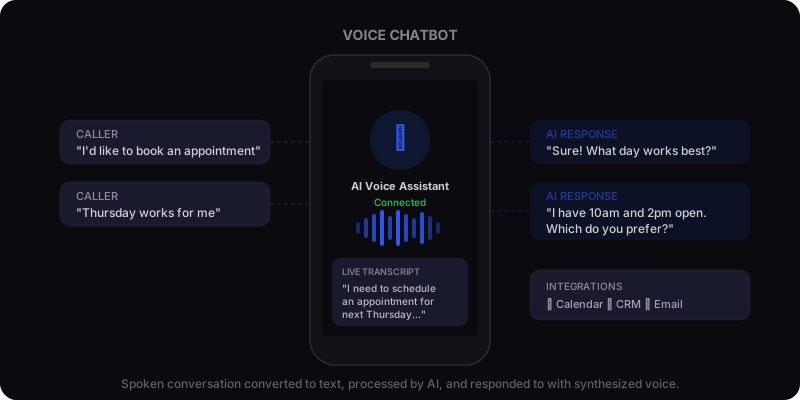
Voice chatbots interact with users through spoken language instead of text. They process speech, understand intent, and respond with synthesized voice. Some operate on the phone (IVR systems), while others work through smart speakers or in-app voice interfaces.
How they work:
The visitor speaks a question or command. The bot converts speech to text, processes the intent using NLP or an LLM, generates a response, and converts it back to speech. More advanced voice bots can handle multi-turn conversations, transfer to live agents, and integrate with CRMs and scheduling tools.
Pros:
- Accessible for users who prefer speaking over typing
- Can handle phone-based inquiries without a human agent
- Useful for hands-free scenarios (driving, cooking, multitasking)
- Strong fit for appointment-heavy businesses that receive many phone calls
- Can reduce hold times and missed calls
Cons:
- More expensive and complex to implement than text-based bots
- Accuracy depends on speech recognition quality, accents, and background noise
- Harder to convey complex information (pricing tables, lists, links) via voice
- Users often find voice bots frustrating if the recognition is not accurate
- Limited visual feedback compared to text-based chat
Best for:
- Medical offices and clinics handling appointment scheduling by phone
- Restaurants managing reservations and takeout orders
- Utilities and service providers with high call volumes for routine inquiries
- Large businesses with dedicated call center operations looking to reduce volume
Not ideal for:
- Small businesses with low phone volume (the cost is hard to justify)
- Businesses where the information is complex and better conveyed visually
- Industries where customers strongly prefer human phone interaction (luxury services, high-stakes financial advising)
Example platforms: Google Dialogflow CX, Amazon Lex, Bland AI, Vapi, Air AI
5. Social media and messaging chatbots
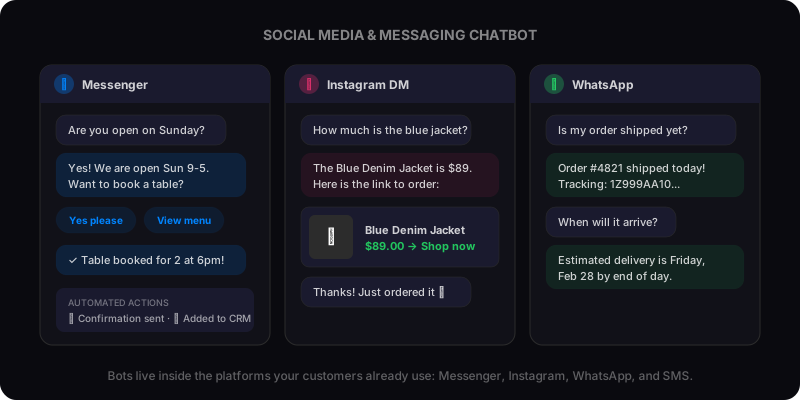
These chatbots live inside platforms like Facebook Messenger, Instagram DMs, WhatsApp, or SMS rather than on your website. They meet customers where they already spend time and can handle inquiries, send promotions, and even process orders without the customer ever visiting your site.
How they work:
The bot is connected to your social media or messaging account. When a customer sends a message, the bot responds based on rules, AI, or a combination. Some platforms support rich media like images, carousels, and quick-reply buttons within the conversation.
Pros:
- Meets customers on platforms they already use daily
- Higher open and response rates than email for promotions and follow-ups
- Can automate responses to common DMs and comments
- Supports rich media (images, buttons, carousels) for product showcasing
- Lower friction than directing users to a separate website
Cons:
- You are building on a platform you do not own (algorithm and policy changes can break things)
- Limited customization compared to a website chatbot
- Harder to integrate with your CRM or internal systems
- Conversation data lives on the platform, not in your database
- Some customers may not want to interact with a bot on social media
Best for:
- E-commerce brands with active social media audiences
- Restaurants and local businesses that receive many DMs for hours, menus, or reservations
- Coaches, consultants, and creators who sell through social media
- Any business running paid social campaigns that wants to capture leads directly in-platform
Not ideal for:
- B2B companies where the buying process is complex and longer
- Businesses that need deep CRM integration and full data ownership
- Industries with strict compliance requirements around data storage
Example platforms: ManyChat, Chatfuel, Meta Business Suite (native), WhatsApp Business API
How to choose the right chatbot for your business
There is no single best type. The right choice depends on your customer behavior, question complexity, team size, and budget.
Start with these questions:
-
What are your customers asking most often? If it is the same 10 questions, a rule-based or hybrid bot handles that well. If questions are varied and nuanced, you need AI.
-
Where do your customers reach you? If most inquiries come through your website, a website chatbot makes sense. If they come through Instagram DMs or phone calls, consider social or voice bots.
-
What action do you want the bot to drive? Lead capture and appointment booking benefit from hybrid bots with structured flows. General Q&A and education work well with AI-powered bots.
-
What is your budget? Rule-based bots are the cheapest entry point. AI and hybrid bots cost more but deliver more value for businesses with higher conversation volumes.
-
How much maintenance can you commit to? All chatbots need some oversight, but rule-based bots need manual updates for every new scenario while AI bots improve more autonomously over time.
Quick comparison
| Type | Complexity | Cost | Best for | Maintenance |
|---|---|---|---|---|
| Rule-based | Low | Low | Simple FAQs, basic routing | High (manual updates) |
| AI-powered | Medium-High | Medium-High | Complex questions, lead qualification | Medium (periodic review) |
| Hybrid | Medium-High | Medium-High | Lead capture + open conversation | Medium |
| Voice | High | High | Phone-heavy businesses | High |
| Social/messaging | Low-Medium | Low-Medium | Social-first audiences | Medium |
The bottom line
A chatbot is only as useful as the thought behind it. The fanciest AI bot trained on bad content will frustrate visitors. A simple rule-based bot with well-written scripts can outperform it.
Pick the type that matches how your customers actually behave, not the one with the most impressive demo. Start simple, measure what works, and expand from there.
If you are not sure which type fits your business, we can help you figure it out.
FAQs
A rule-based chatbot follows pre-written scripts and decision trees. It can only respond to inputs it was specifically programmed for. An AI chatbot uses natural language processing to understand intent and generate responses, even for questions it has never seen before.
For most small businesses, a hybrid chatbot offers the best balance. It uses AI for natural conversation while falling back on structured flows for critical actions like booking appointments or collecting contact information.
AI chatbots require initial training and periodic review but not constant manual updates. You should review conversation logs monthly to catch gaps and refine responses. Over time, maintenance decreases as the bot learns from more interactions.
No. Chatbots are best used to handle repetitive questions and route complex issues to your team. They free up your staff to focus on higher-value work, but they should not be the only support channel available to your customers.
Costs vary widely by type. Basic rule-based chatbots can be free or low cost through platforms like Tidio or Drift. AI-powered and hybrid chatbots typically involve setup fees and monthly management costs. The right investment depends on your conversation volume and business goals.
Industries with high volumes of repetitive questions benefit most. This includes healthcare, real estate, e-commerce, professional services, hospitality, and nonprofits. Any business where customers frequently ask the same questions or need help outside business hours is a strong candidate.